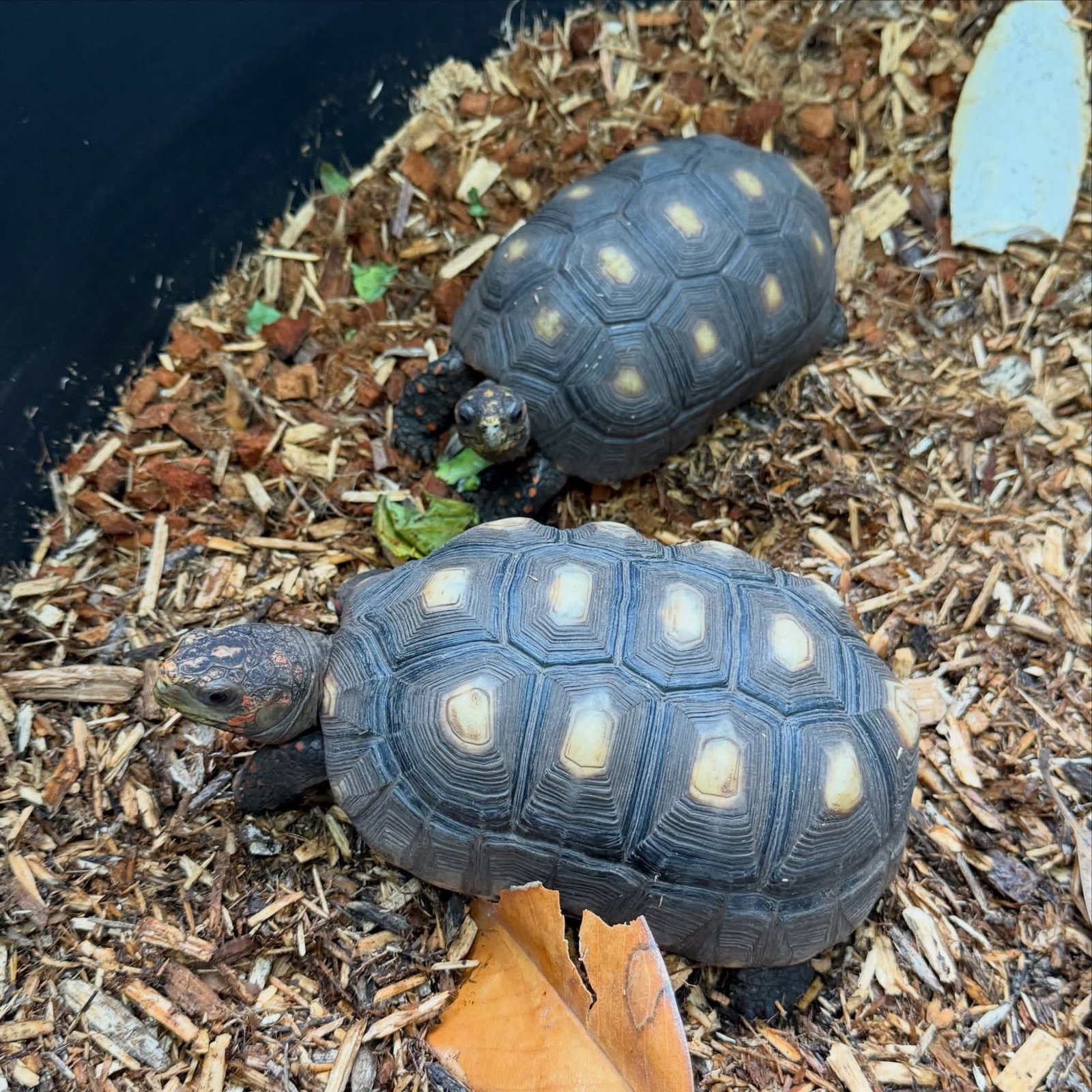
Tortoise
Tortoises are terrestrial reptiles belonging to the family Testudinidae, renowned for their distinctive shells and long lifespans. Unlike their aquatic turtle relatives, tortoises are fully adapted to life on land and are found across a wide range of habitats, including deserts, tropical rainforests, grasslands, and scrublands. Key Characteristics Shell Structure: A tortoise's shell is fused to its spine and ribcage, consisting of a rounded top dome (carapace) and a flat underside (plastron). It acts as a heavy-duty shield against predators. Physical Traits: They possess sturdy, column-like legs—often compared to elephant feet—with short clawed toes built for crawling and digging on land rather than swimming. Diet: The vast majority of tortoise species are strict herbivores, feeding primarily on grasses, weeds, leafy greens, flowers, and cactus pads. Lifespan: Tortoises are among the longest-living animals on Earth. Depending on the species, many live between 50 to 100 years, with giant tortoises capable of surpassing 150 years. Sizes range dramatically from small species like the Egyptian Tortoise (growing to under 5 inches) to massive species like the Galápagos and Aldabra Giant Tortoises, which can weigh over 500 pounds. As slow-moving ectotherms (cold-blooded), they rely on their environment to regulate body temperature and spend much of their day basking or burrowing to escape extreme heat or cold. Would you like to explore a specific species of tortoise, or learn more about their ideal habitat and diet setup?