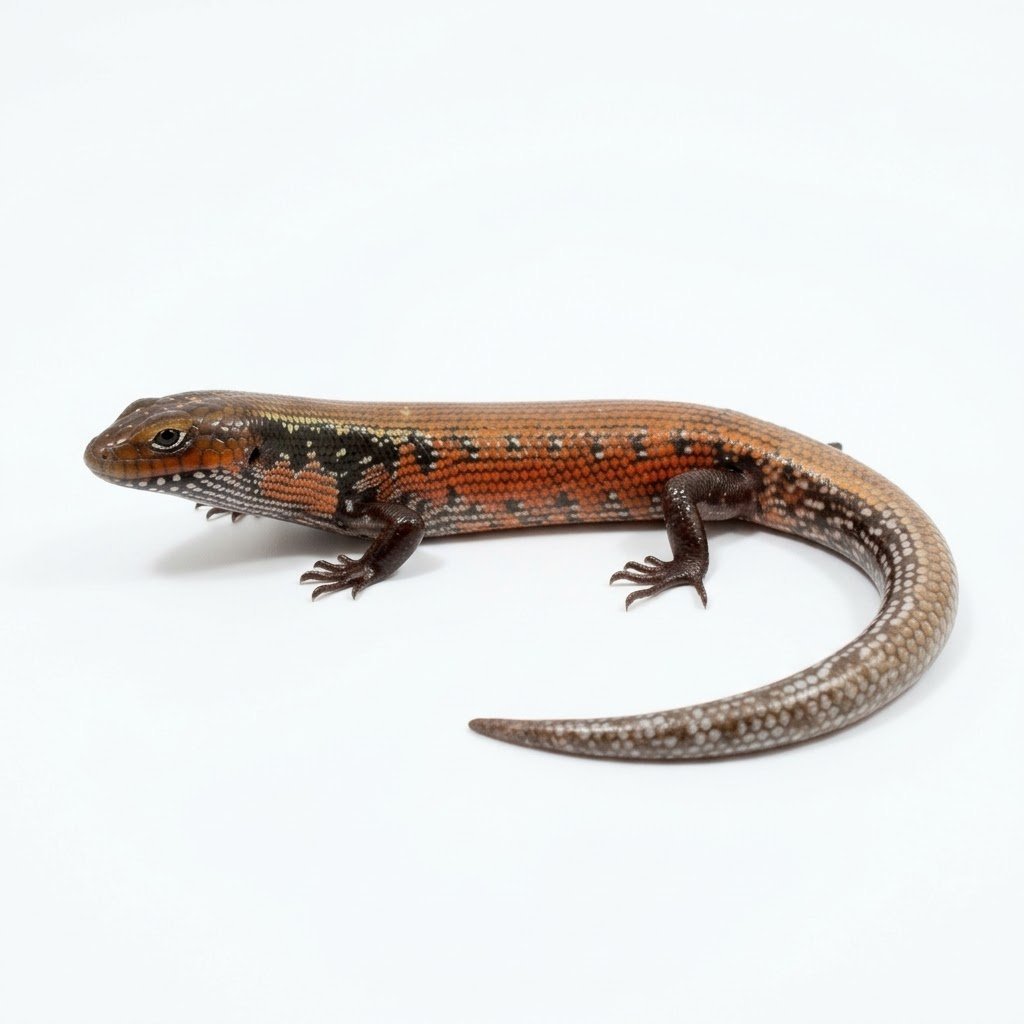
Captive-Bred Emerald Tree Skinks
Lamprolepis smaragdina
$150.00
Not available to order online yet — call or text +1 (901) 877-8015.
Description
Often called the "dogs of the lizard world," these brilliant emerald-green skinks are bold, curious, and quick to learn hand-feeding and target training.
Animal Details:
Species: Lamprolepis smaragdina (Emerald Tree Skink)
Status: Healthy, established captive-bred [Juveniles / Sub-Adults / Pairs]
Diet: Voracious appetite! Currently feeding on gut-loaded crickets, dubia roaches, and mealworms dusted with Calcium + D3 and vitamins.
Condition: Bright colors, intact tails, perfect toes, and super inquisitive personalities.
Why Keep Emerald Tree Skinks?
Diurnal & Active: Unlike nocturnal species that hide all day, ETS are out exploring, climbing, and watching you constantly.
Vibrant Emerald Color: Striking bright green body with long, agile prehensile-like tails.
Social & Confident: With routine handling, they become exceptionally tame and readily climb onto your hands.
Quick Setup Needs:
Enclosure: Vertical arboreal setup (18 \times 18 \times 36\text{ inches} minimum for adults) filled with branches, cork bark, and live or silk foliage.
Lighting/Heat: Linear UVB (T5 6% / Zone 2-3) with a focused basking spot around 95°F (ambient 78–85°F).
Humidity: 70–80% with daily misting and decent airflow.
Identity & origin
Species: Lamprolepis smaragdina
Captive-bred: Yes
Sex: Group
Habitat & environment
Enclosure: Enclosure Size & Dimensions Emerald Tree Skinks are active, fast-moving, and strictly arboreal—they utilize every inch of vertical space. Single Adult or Pair: Minimum 18 \times 18 \times 36\text{ inches} (Length \times Width \times Height) vertical front-opening terrarium. Small Group (3 to 4 Skinks): Minimum 24 \times 18 \times 36\text{ inches} or 36 \times 18 \times 36\text{ inches} vertical setup. Enclosure Type: Front-opening glass or PVC enclosures with top screen ventilation work best for maintaining high humidity while allowing necessary airflow. Heating & Temperature Gradient A proper temperature gradient allows skinks to warm up under a basking lamp and move down to cool off as needed. Basking Ledge/Branch: 95°F to 100°F (35°C to 38°C) measured directly at the basking surface. Upper Canopy (Ambient): 82°F to 88°F (28°C to 31°C). Lower Enclosure Base: 75°F to 80°F (24°C to 27°C). Nighttime Temperature: 70°F to 75°F (21°C to 24°C). Heat Source: A low-wattage incandescent or halogen flood bulb positioned directly above a high basking branch, connected to a dimming thermostat. Lighting & UVB Requirements Because Emerald Tree Skinks are diurnal and sun-loving, high-output UVB lighting is mandatory for calcium metabolism and overall health. UVB Fixture: Linear T5 HO 6% (or 5.0) fluorescent tube spanning at least two-thirds of the enclosure length. Distance: Place the basking branch roughly 8 to 12 inches below the UVB light through the top screen. Photoperiod: Keep lights on a 12-hour ON / 12-hour OFF timer year-round. Humidity & Hydration Humidity Level: Maintain an average relative humidity of 70% to 80%. Misting Routine: Mist thoroughly 1 to 2 times daily. Skinks primarily lick water droplets off leaves and cork bark rather than drinking from standing water dishes. Substrate Base: Moisture-retaining choices like coconut coir, cypress mulch, or a bio-active topsoil mix topped with sphagnum moss. Drainage: Use a 2-inch bottom layer of clay drainage balls (LECA) under a mesh barrier to prevent the substrate from becoming waterlogged. Interior Furniture & Enrichment Climbing Structures: Pack the vertical space with cork bark tubes, hollow branches, bamboo poles, and bendable vines running both horizontally and vertically. Hiding Spots: Place cork flats and hanging hides high up near the top of the canopy where skinks feel most secure. Plant Cover: Use live plants (such as Pothos, Schefflera, and Snake Plants) or dense silk foliage to create hiding places and retain leaf-surface drinking water.
Decor: Background: 3D cork or coco panels so skinks can scale the walls safely. Climbing "Highways": Cork bark tubes, ghostwood, manzanita, and bendable vines filling the top two-thirds of the tank. Live Foliage: Sturdy plants like Pothos, Schefflera, and Snake Plants for hiding cover and collecting drinking droplets. Elevated Ledges & Hides: Hanging coconut hides and magnetic cork ledges placed high up near basking areas.
Substrate: 1. Drainage Layer (Bottom) Clay Balls (LECA) or Expanded Clay: A 2-inch layer at the very bottom captures excess misting water so the main soil doesn't rot. Substrate Mesh Barrier: Separates the drainage layer from the soil mix. 2. Main Substrate Layer (3–4 inches) ABG Mix (Atlanta Botanical Garden): The gold standard for tropical terrariums—a mix of tree fern fiber, peat moss, crushed charcoal, sphagnum moss, and fir bark. Custom Tropical Blend: Alternatively, mix coco coir/fiber, cypress mulch, horticultural charcoal, and sphagnum moss. 3. Top Cover (Misting & Humidity Boost) Leaf Litter: Dried oak or magnolia leaves protect micro-fauna and give the tank a natural tropical look. Sphagnum Moss: Scattered around the base to retain surface moisture between daily mistings.
Temperature: Basking Spot: 95°F to 100°F (35°C to 38°C) on a high branch or ledge directly under the heat lamp. Ambient Canopy (Upper Area): 82°F to 88°F (28°C to 31°C). Cool Zone (Lower Base): 75°F to 80°F (24°C to 27°C). Nighttime Drop: 70°F to 75°F (21°C to 24°C)—no extra night heat needed if room stays above 68°F.
Humidity: Ideal Range: 70% to 80% relative humidity overall. Daily Spikes: Can spike up to 90%+ during misting sessions, dropping to around 60–70% between mistings to allow air exchange. Misting Routine: Heavy misting 1 to 2 times daily (morning and evening) with RO, distilled, or conditioned water. Hydration Note: Emerald Tree Skinks rarely drink from standing water bowls; they lick water droplets off leaves, glass, and cork bark.
Feeding & behavior
Feeding: Primary Diet: Insectivorous (90%+ live insects). Gut-loaded crickets, dubia roaches, mealworms, waxworms, and silk worms. Treats & Fruit: Occasional Pangea/Repashy crested gecko diet, mashed banana, or papaya offered on an elevated ledge once a week. Feeding Frequency: Babies/Juveniles: Daily (as many small insects as they can eat in 5–10 minutes). Adults: 3 to 4 times per week (4–6 appropriately sized insects per feeding). Insect Size: Prey length should be smaller than the space between the skink's eyes. Supplements: Dust insects with Calcium + D_3 every feeding for juveniles, 2–3 times weekly for adults. Dust with a Multivitamin once a week.
Behavior: Highly Active & Diurnal: Awake, curious, and constantly moving during the day. They love climbing, jumping between branches, and watching their surroundings. Extremely Social & Bold ("Lizard Dogs"): Naturally inquisitive and far less timid than most reptiles. They learn to recognize their keepers quickly and will come to the front of the enclosure for food. Easy to Tame: With routine hand-feeding, they readily climb onto hands and arms, making them one of the most interactive display lizards in the hobby. Semi-Social Group Dynamics: Can be kept in small groups (typically one male with multiple females, or all females). Males will fight if cohabitated, so keep only one male per setup. Tail Autotomy (Tail Shedding): Possess semi-prehensile tails used for balance and climbing. While they can drop their tails if grabbed or stressed, it is rare with gentle handling.
Breeding & sexing: Sexing Emerald Tree Skinks Determining sex can be tricky on sub-adults, but adults display clear physical and behavioral traits: * Hemipenal Bulge (Males): Mature males have a distinct, prominent swelling at the base of the tail just behind the vent. Females have a smooth, tapered tail base. * Femoral Pores (Males): Males possess a line of enlarged, waxy, highly visible femoral pores along the inner underside of their thighs. Females have smaller, faint, or barely noticeable pores. * Head & Body Structure: Males usually feature wider, blockier heads and slightly broader jawlines. Females tend to be a bit slimmer with narrower heads. * Behavior: Males are territorial and aggressive toward other males; two males kept together will fight. Breeding Overview Emerald Tree Skinks are prolific breeders once established in a stable pair or harem (1\text{ male} : 2\text{--}3\text{ females}). * Maturity: Reached at roughly 12 to 18 months of age. * Courtship & Mating: No strict brumation is required, though a slight 2 to 3-week winter drop in nighttime temperature (68\text{--}70^\circ\text{F}) combined with a heavy increase in misting during spring often triggers breeding behavior. * Clutch Size & Frequency: * Females lay small clutches of 2 to 4 eggs every 4 to 6 weeks during the active season. * Females can lay up to 6–8 clutches per year if kept in peak health. Egg Laying & Incubation * Lay Box: Provide an elevated container filled with damp sphagnum moss or moist coconut coir hidden in the canopy or a cork bark tube, as females prefer laying off the ground. * Incubation Medium: Slightly damp vermiculite or perlite (1:1 water-to-medium ratio by weight). * Incubation Temp: 78^\circ\text{F} to 82^\circ\text{F} (25.5^\circ\text{C} to 28^\circ\text{C}). * Hatch Time: Eggs typically hatch in 60 to 75 days. * Hatchling Care: Raise hatchlings in smaller arboreal setups with high humidity and daily feedings of pinhead crickets, flightless fruit flies, and small dubia nymphs dusted with Calcium + D_3.
Safety & care notes
Venom / safety: Non venomous
EMERALD TREE SKINK CARE NOTE
Species: Lamprolepis smaragdina | Lifespan: 10–15+ years | Adult Size: 12–16 inches (including tail)
1. Housing & Environment
Enclosure Size: Minimum 18 \times 18 \times 36\text{ inches} vertical front-opening terrarium for an adult pair. Highly active, arboreal species that needs vertical climbing space.
Temperature:
Basking Spot: 95^\circ\text{F} \text{--} 100^\circ\text{F} on an elevated branch.
Ambient Canopy: 82^\circ\text{F} \text{--} 88^\circ\text{F}.
Cool Base: 75^\circ\text{F} \text{--} 80^\circ\text{F}.
Night Drop: 70^\circ\text{F} \text{--} 75^\circ\text{F}.
Humidity: 70%–80% average. Mist heavily 1–2 times daily. Skinks lick water off leaves rather than drinking from bowls.
Lighting: Linear T5 HO 6% (or 5.0) UVB running 12 hours ON / 12 hours OFF. Essential for calcium absorption and vitamin D_3 synthesis.
2. Decor & Setup
Climbing Structures: Fill the upper two-thirds with cork bark tubes, ghostwood, bamboo, and bendable vines.
Substrate: 2-inch drainage layer (LECA) separated by mesh from a tropical moisture-retaining soil mix (ABG mix or coco coir/cypress mulch), topped with leaf litter and sphagnum moss.
Foliage: Live plants like Pothos, Schefflera, and Snake Plants for cover and water retention.
3. Diet & Feeding
Primary Food: Insectivorous. Offer gut-loaded crickets, dubia roaches, mealworms, and silkworms.
Feeding Schedule:
Juveniles: Daily (as many small insects as eaten in 5 minutes).
Adults: 3–4 times per week (4–6 insects per feeding).
Treats: Pangea/Repashy crested gecko diet or mashed banana once per week on an elevated ledge.
Supplements:
Dust insects with Calcium + D_3 every feeding for juveniles; 2–3 times weekly for adults.
Dust with a Multivitamin once weekly.
4. Temperament & Handling
Behavior: Diurnal, highly curious, and exceptionally bold.
Taming: Learn hand-feeding quickly. Allow them to climb onto your hand voluntarily—never grab them from above, as they can drop their tails if threatened or restrained.
Social Structure: Can be kept in small groups (1 male + multiple females or all females). Never cohabitate two males due to territorial aggression.